
Deconstructing Devices: Uncovering the Plastics Behind Medical Innovation
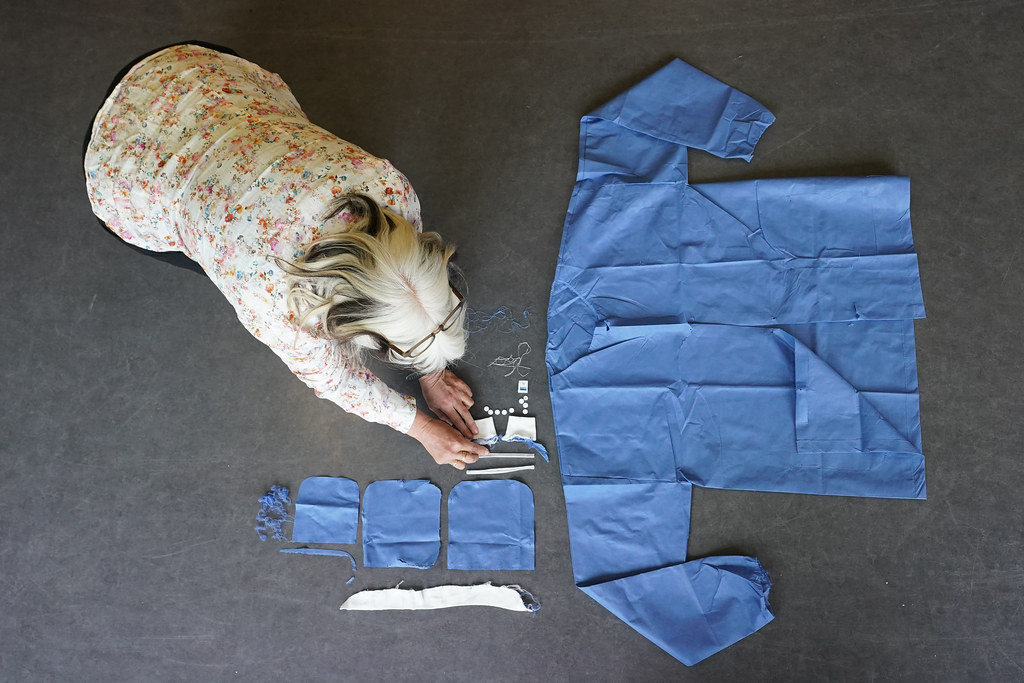
A few of the many components of a seemingly simple single-use warm-up jacket.
We interact with plastic every day through takeout containers, pens, phone cases, and even rubber ducks. It’s a material so embedded in our lives that we rarely pause to ask: What is this made of? Where will it end up? How did it come to be?
But what if we did pause? What if we looked closer, not at packaging, but at the intricate, often overlooked objects that make up modern healthcare?
That’s exactly what we set out to do during the 'Deconstructing Devices' workshop.
After a day exploring medical devices brought in by global partners, we were given the rare chance to open them up. From vaginal speculums and IV drips to glucose sensors, warming jackets, and emergency thermal blankets, each device offered its own story. We just had to take it apart to read it.
It’s essential work, as healthcare facilities generate an estimated 5.9 million tonnes of waste annually, much of which is composed of single-use plastics that aren't easily recyclable (1). And yet, we rarely stop to think about how complex these devices are.
Millie Marriott Webb led the session with curiosity and enthusiasm, framing the day not just as a technical activity but as a playful, necessary investigation into what these devices are composed of and what that might mean for design, waste, and sustainability.
Before diving in, we received a clear safety briefing: goggles on, gloves available, no tools left lying around, and always look out for one another. The workshop had a buzz of energy and focus, with each station laid out to encourage collaboration while maintaining order.
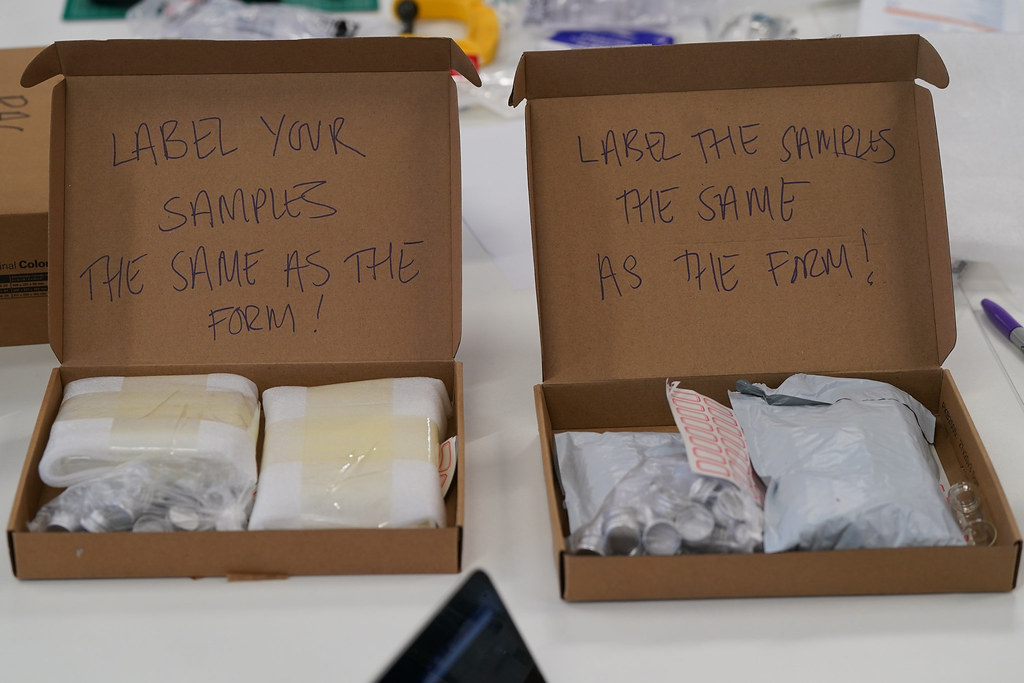
Each device came packaged with safety notes, manufacturer information, and a QR code linking to a Microsoft Form. That form prompted us to record the device’s components, their weights, any recognisable certifications, and general observations. It was a detailed process designed to build a database for the project, but one that also made us reflect deeply on just how complex these items are.
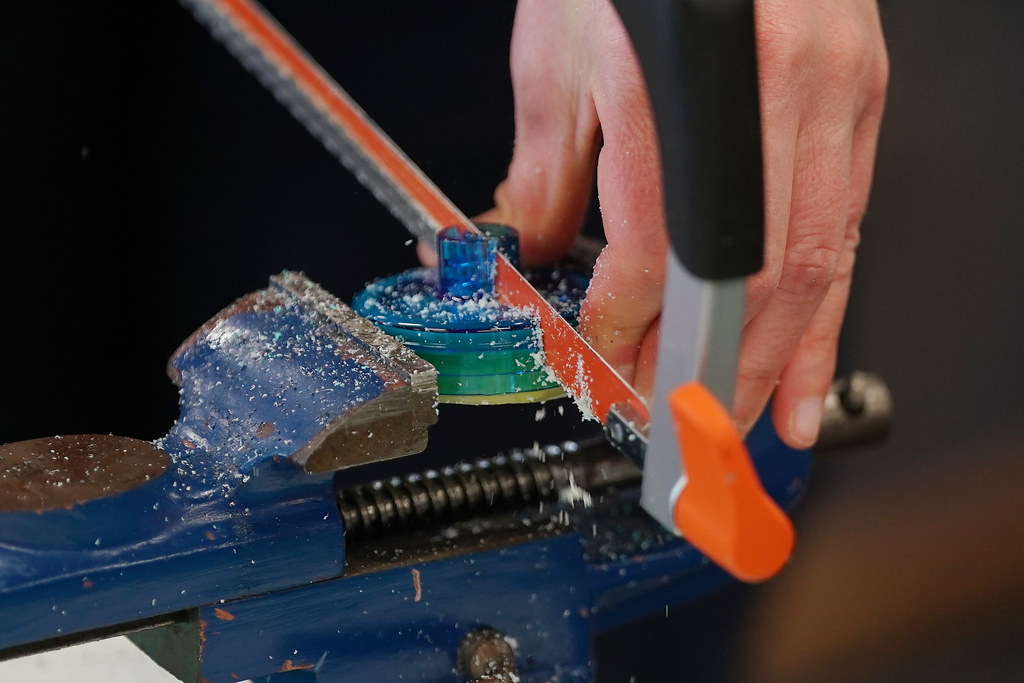
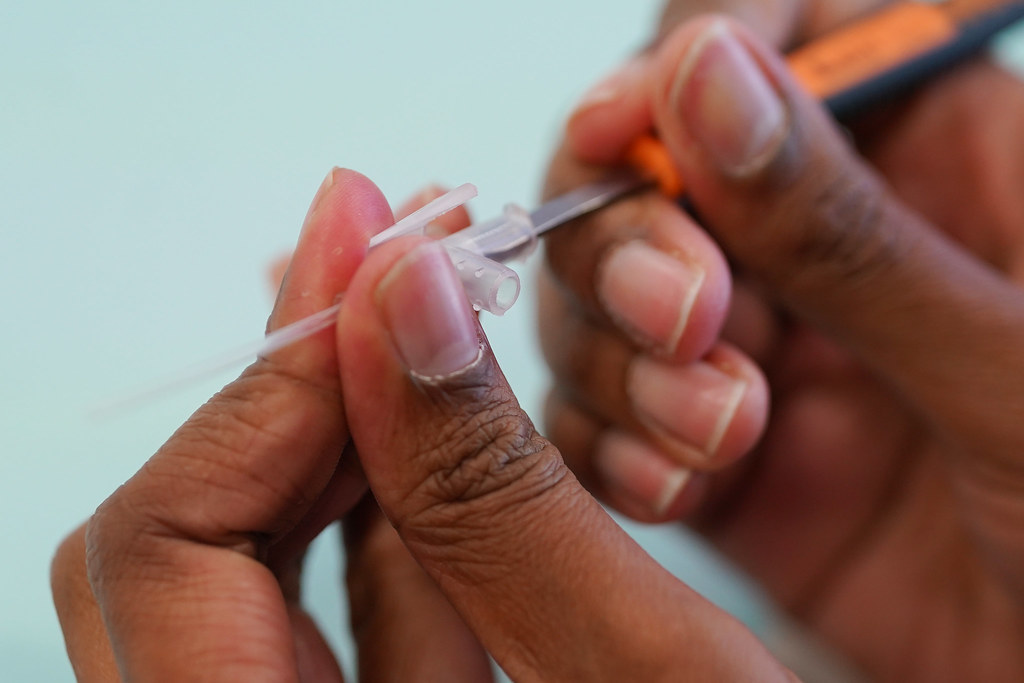
The deconstruction phase was both fun and fiddly. Using scalpels, scissors, and other tools, we began breaking open the devices, doing our best to keep components intact. This required some patience and a fair amount of problem-solving, especially when things didn’t come apart as expected. Thankfully, with support from Maiwenn Kersaudy Kerhoas, Professor in Microfluidic Engineering at Heriot Watt University, whose practical knowledge was invaluable, we kept the process safe and precise.
Once the components were laid out, the weighing began. One by one, each piece was described (often with improvised names like “small black rubber ring” or “flat clear paddle”) and measured on a sensitive digital scale. While straightforward in theory, this step took time, especially for devices with over a dozen parts. The task of recording detailed weights and descriptions gave us a new appreciation for the sheer number of materials used in even the simplest-seeming devices.
It’s estimated that a single medical device can contain up to 10 different types of plastic polymers, each requiring a different recycling stream (2). Seeing them laid out, mixed rubber, rigid polypropylene, transparent films, embedded metals made that challenge unmissable. Some devices had as few as four components; others had over 15.
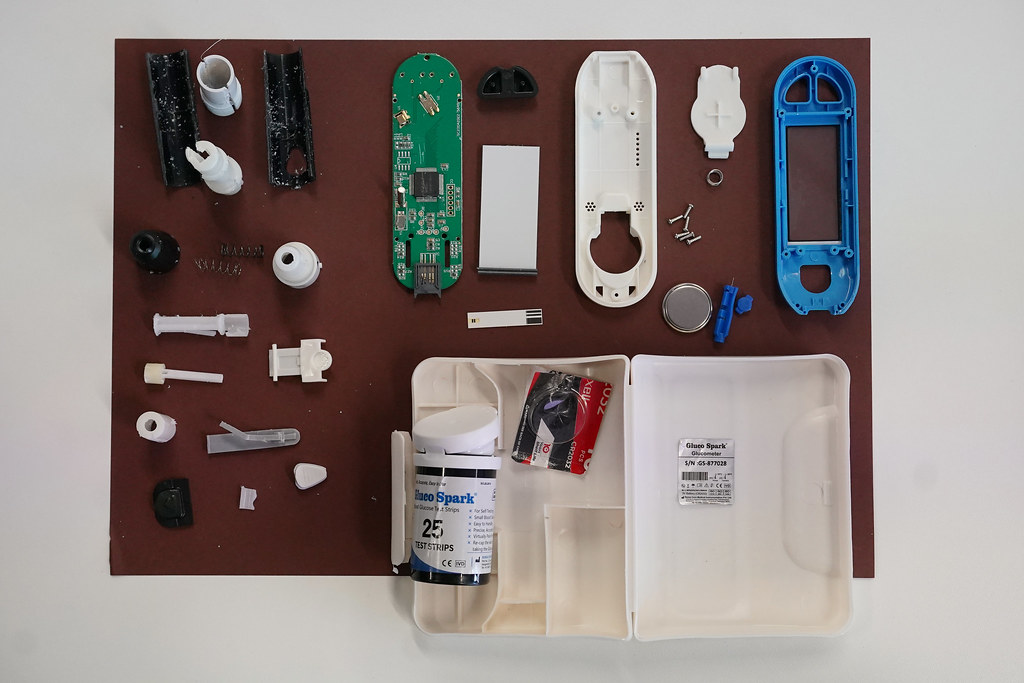
Once the data was entered on the form, participants arranged their components neatly for photography. Comparing a fully assembled device to its exploded version was a moment of clarity. What looked minimal on the outside revealed an underlayer of material complexity, exactly the kind of detail that renders most of these objects unsuitable for recycling. Even though 85% of hospital waste is classified as non-hazardous, a large portion still ends up in landfills or incinerators due to contamination and design (3).
Photographs were printed and annotated to highlight each component’s role, creating a visual narrative of decomposition and design.
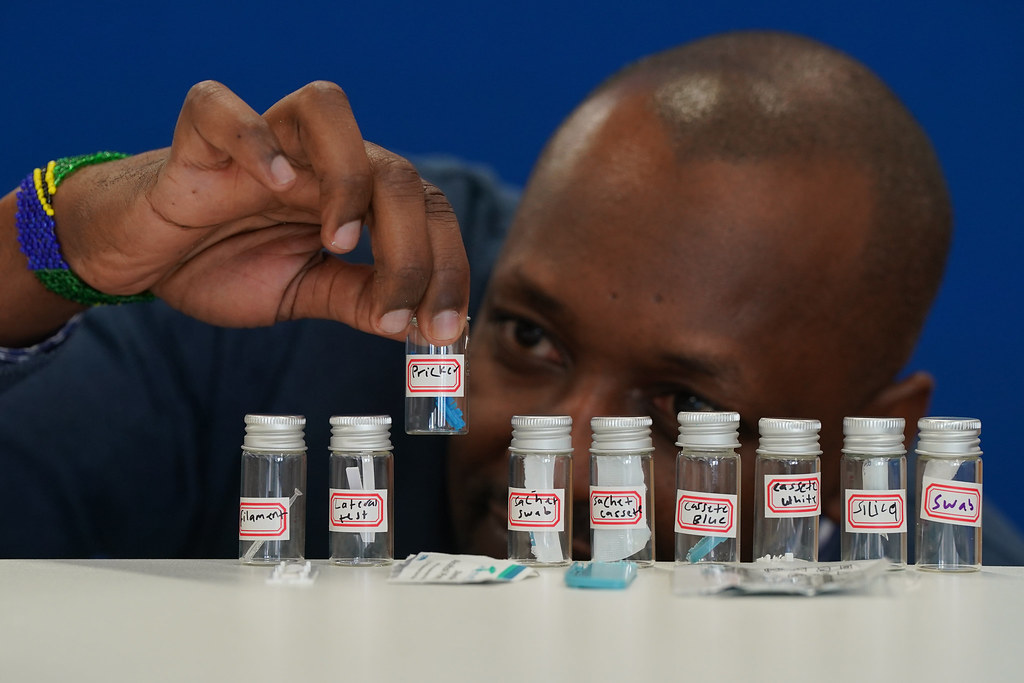
For those who completed the process, the final step was material analysis. Participants cut 1x1 cm squares of selected parts and sealed them in tubes, ready for mass spectrometry testing. This lab work would identify the precise polymers used, information that could inform better design choices in the future.
Reflecting on the day, a few improvements emerged. Having just one sensitive scale led to bottlenecks; future iterations would benefit from more weighing stations. The Microsoft Form, while useful, wasn’t flexible enough for all device types; a simplified or dynamic version would improve user experience and data consistency.
Still, these are minor refinements. The workshop was a rare and eye-opening experience, one that showed just how much we take for granted in the design and disposal of medical tools. In a world where over 400 million tonnes of plastic are produced annually and less than 10% is recycled (4), even modest efforts toward material understanding can spark bigger conversations about sustainability.
And perhaps most importantly, we were reminded that to build better systems, sometimes we need to start by taking things apart.
Images courtesy of © STEWARTATTWOODPHOTOGRAPHY
References
- Sepetis A., Zaza P.N., Rizos F., and Bagos P.G. Identifying and Predicting Healthcare Waste Management Costs for an Optimal Sustainable Management System: Evidence from the Greek Public Sector. International Journal of Environmental Research and Public Health. 19, no. 16 (August 2022):9821. https://doi.org/10.3390/ijerph19169821 (Accessed: 30 May 2025)
- European Commission. Single-use plastics [Internet]. (2023). Available from: https://environment.ec.europa.eu/topics/plastics/single-use-plastics_en (Accessed: 30 May 2025)
- World Health Organization. Safe management of wastes from health-care activities, 2nd ed. [Internet]. (2014). Available from: https://www.who.int/publications/i/item/9789241548564 (Accessed: 30 May 2025)
- Greenpeace. What really happens to your plastic recycling? [Internet]. (2021). Available from: https://www.greenpeace.org.uk/news/plastic-recycling-export-incineration/ (Accessed: 30 May 2025)
