
Contingencies: Researching Disposability in Healthcare through Historical Methods
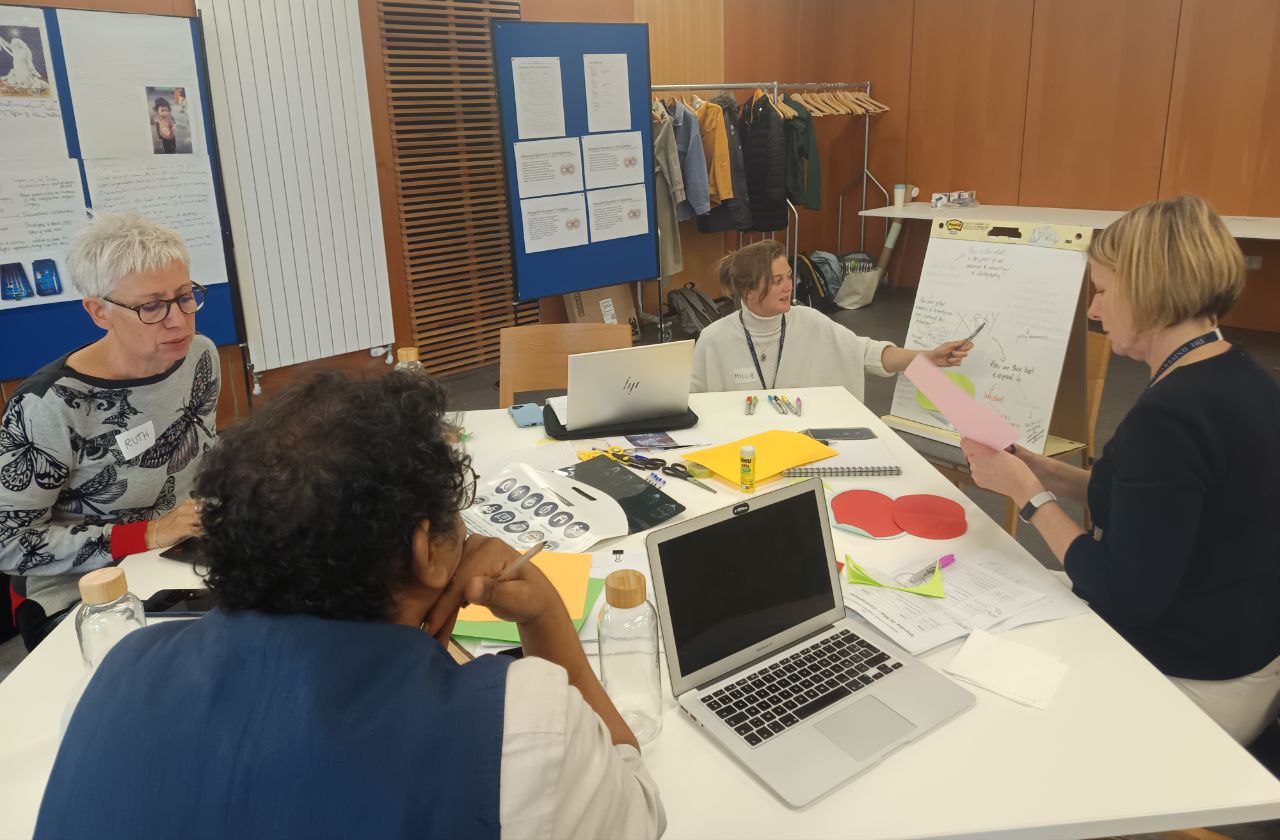
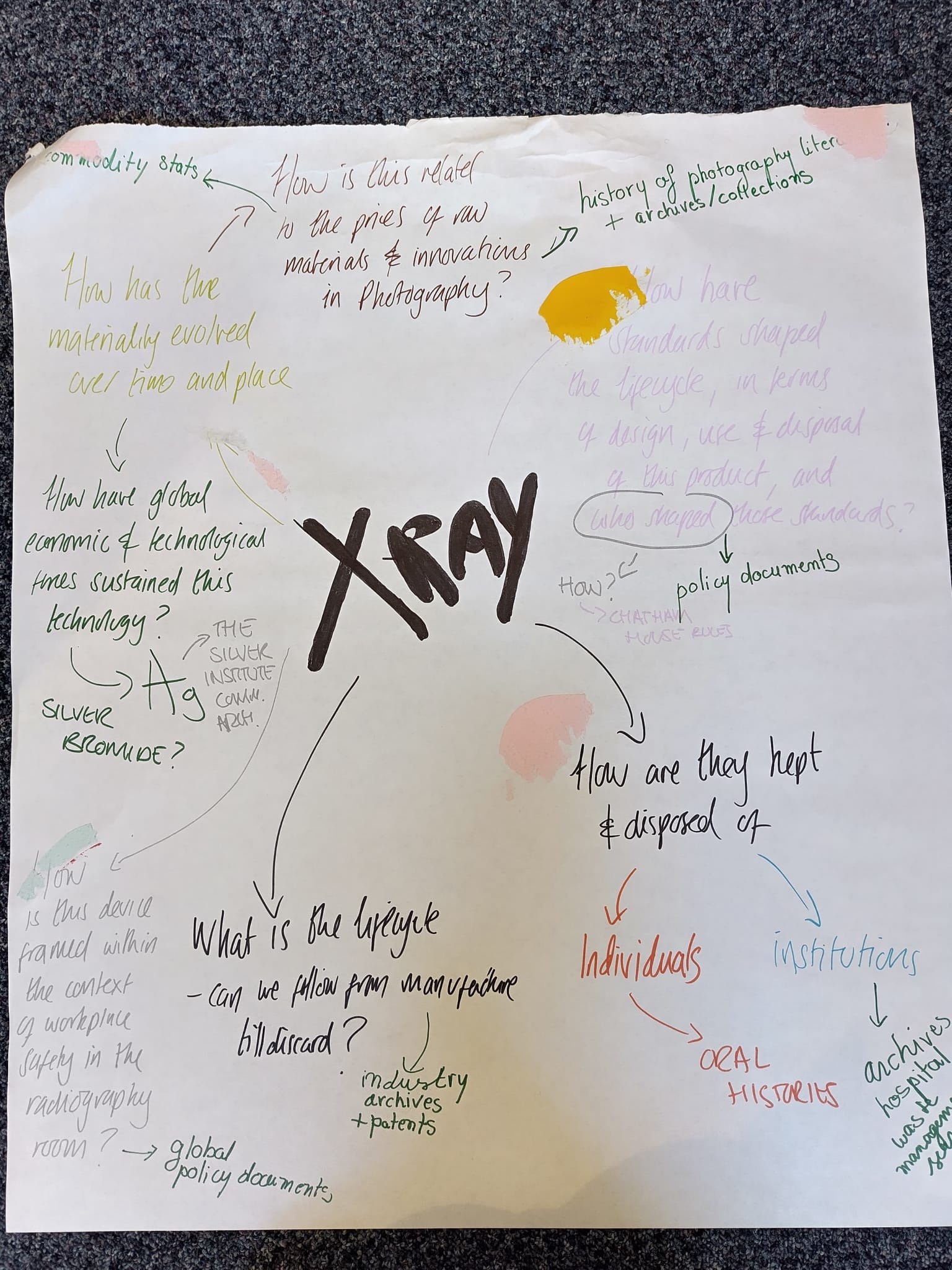
Team members workshopping the factors leading to the disposability of X-rays.
On Monday 26 May 2025, the After the Single Use project held its first in-person thematic workshop, exploring the idea of contingencies. As one of our core research themes, this session asked a foundational question for our research: how did single-use devices become normal in healthcare - and what alternative paths might have been possible?
Too often, the adoption of innovations in medicine, including disposable devices, is presented as inevitable, as the natural result of scientific and technical progress. Our project aims to challenge and denaturalize this narrative. Instead, we ask: what are the underpinning social, economic, legal and political factors that led to choosing disposables over reusable and to normalize them? And how did this history unfold differently in various places?
Jeremy Greene opened the session by introducing alternative narrative frameworks that disrupt the conventional idea of linear medical progress. In addition to the familiar arc of continual linear improvement, he outlined cyclical, declining, cataclysmic, and fragmented story structures - each helping us rethink how we understand progress and change over time. Paying attention to contingency invites us to question choices that were made to favor one device over another, choices that were not inevitable. Taking us through the example of a sterilizer with the ‘Castle’ brand name, found at a flea market, and the evolution of design, marketing and user needs, Jeremy offered tools to find actors and active decisions behind the apparent passive-voice through which the emergence of devices are often described. An image search using the term “Castle sterilizer” turned up versions of the device on eBay, some of which offered date and location of production as well as a company: Wilmot Castle. Searching the name of the Wilmot Castle Company turned up listings in the Smithsonian National Museum of American History, biographical information on its founder. A review of hospital journals located advertisements from the Wilmot Castle Company listed in indexes of advertisements; a search for “Wilmot Castle” in ArchiveGrid turned up several manuscript sources, including a 40-folder collection in the Countway Medical Library at Harvard. Historical imagination allows for historical methods and vice versa.
Following his talk, I provided insights on the historical methods and sources I use in my own work. Conducting research on hospital archives in Switzerland, I highlighted that reports and correspondence from accounting, central supply, sterilization, and hygiene services provide valuable information on the reasons behind the evolution of procurement choices. In combination, nursing and hospital journals reflect issues associated around the uses of medical devices and the advertisements they contain provide an understanding of the types of devices sold on the market, the marketing rhetoric used and the manufacturers. Moreover, industry archives and documents like trade catalogues can deepen our understanding of choices and issues associated with the production of certain devices.
Then, Anne Kveim Lie presented her own sources for researching the transition from reusable to disposable medical devices in Norway from the 1960s to 1990s. Her sources include oral histories with hospital staff, hospital and government archives (policy and procurement documents), national and biographical archives, waste contractors' records, lobbying group documents, film and newspaper archives, as well as materials from art, literature, museums and exhibitions. She emphasized that such historical methods can help us not only understand how disposables became normal but also how this shift was resisted, taking the example of the Scandinavian context of resistance against the commercialization of healthcare.
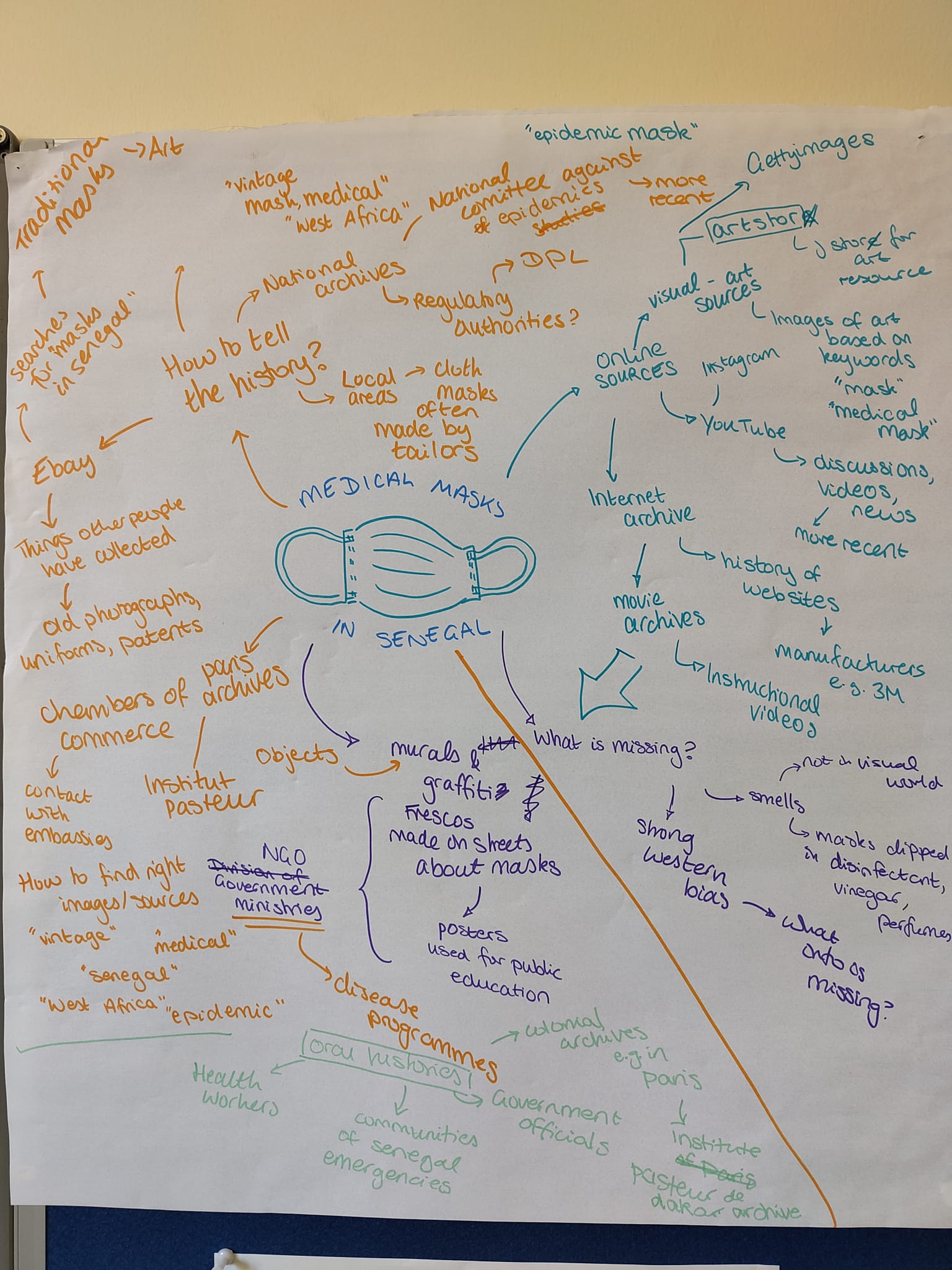
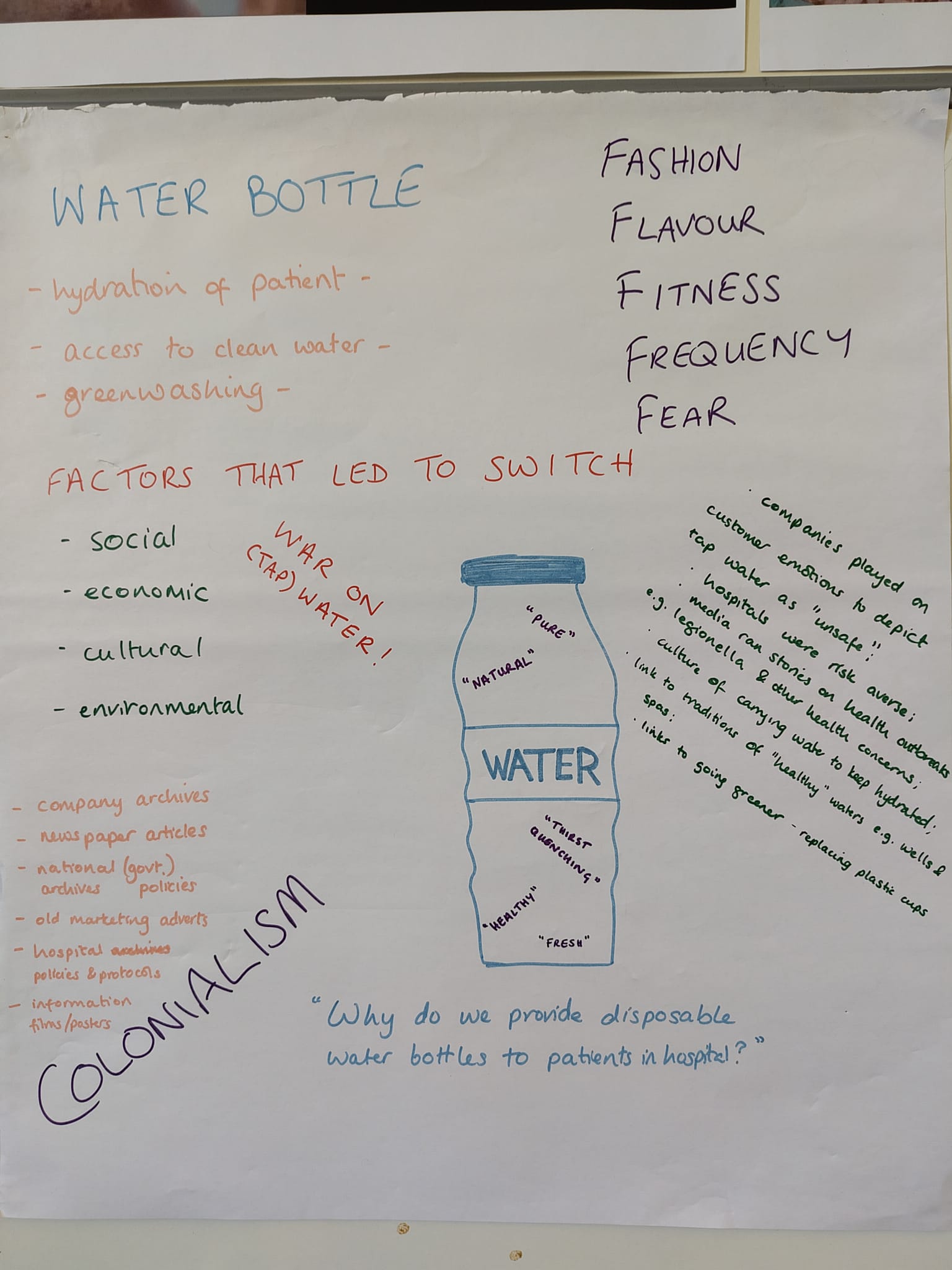
After these provocations, participants worked in small groups to practice this historical thinking by applying it to specific objects and locations. The chosen items - safety boxes for sharps disposal, medical masks in Senegal, plastic water bottles distributed in Irish hospitals and X-rays from India - became focal points for asking how disposability was produced and normalized in different countries. To research, from a historical perspective, the different life stages of each product—design, production, regulation, distribution, use, and disposal—each group brainstormed the ways to research how economic and technological evolution, labor conditions, regulations, colonial legacies, international trade flows, marketing strategies, and cultural norms have shaped these objects' trajectories. We identified a diverse range of potential sources to investigate these dynamics, including oral histories (interviews with manufacturers, hospital managers, government officials and waste pickers), archival materials (national policy documents, NGO records, industry correspondence, trade catalogues, and hospital procurement and sterilization records), journals (hospital and nursing publications, industry advertisements, newspapers), and material and visual culture (museum objects, photographs, films). This activity invited us to pay attention to how local conditions, national contexts and global influences shaped changes in healthcare, and how to research this through a historical lens.
In addition to offering valuable insights into historical research methods, the workshop underscored the contingent nature of this shift. Recognizing that the turn to single use was not inevitable allows us to critically engage with its underlying drivers and to envision alternative trajectories. Ultimately, attending to these contingencies opens up a possibility of futures beyond disposability.
Images courtesy of © STEWARTATTWOODPHOTOGRAPHY
