
Exploring Surgeons’ Hall Museums, Edinburgh
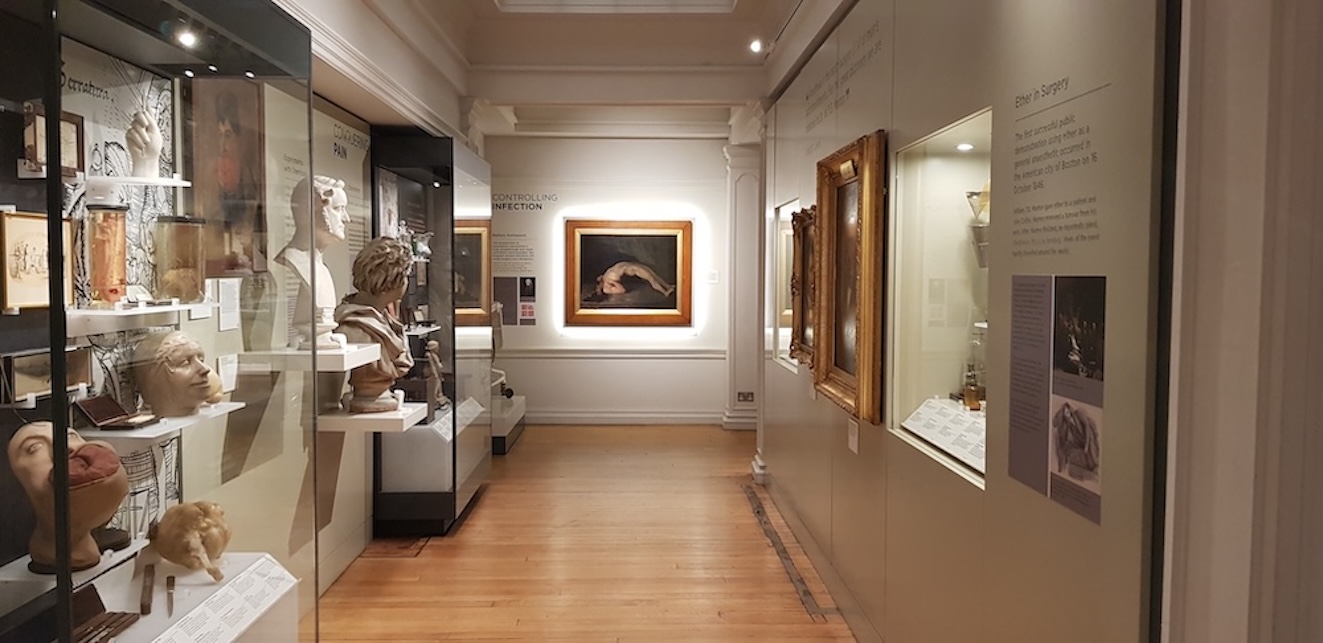
Inside the History of Surgery Museum.
From the 26-29 May 2025, the University of Edinburgh hosted the first annual collaborative workshop for After the Single Use: Rethinking Plastics in Healthcare. We were joined in Edinburgh by our colleagues from Tanzania, Senegal, the USA, Papua New Guinea, Norway, Switzerland, and India, along with collaborators from the project’s NGO partner, Health Care Without Harm, and arts partner, NOBA.
One of the activities scheduled for the week was a visit to Surgeons’ Hall Museums in Edinburgh city centre. Our intention was to explore how medical materials and practices of disposability in healthcare have changed over time, looking back into the past to gain insights on how and why disposability became embedded in healthcare, and what alternative paths may have existed – and may yet exist. The Surgeons’ Hall Museums, with its extensive collection of historical and contemporary medical devices from Scotland and beyond, provided a valuable opportunity for us to reflect on these questions through seeing, and in some cases interacting with, medical devices up close.
The museum is owned by the Royal College of Surgeons of Edinburgh (RCSEd). Founded in 1505, RCSEd is the oldest surgical college in the world. As the museum’s Education Officer, Carl Ronan, told us, RCSEd was widely considered the most advanced and prestigious professional medical body in the UK. It was, and still is, viewed as a beacon of medical excellence across the world. The colonial context of the RCSEd’s global prestige is unaddressed in the museum’s collections. Nonetheless, the museum provides a fascinating glimpse into how the European medical paradigm has changed since the inception of the RCSEd – not only technologically, but also in terms of fundamental ideas about bodies, health, and medical treatment.
For the purposes of our project, the museum’s Curator, Louise Wilkie, had generously prepared a scavenger hunt for us. The History of Surgery Museum takes the visitor through watershed moments in medical history, such as Joseph Lister and William MacEwan’s development of antiseptic techniques. The scavenger hunt helped us identify early sterilisation technologies, for example the use of carbolic spray, phenol, and heat and steam, which would have ensured that surgical equipment and clothing could be reused while keeping the risk of infections low.
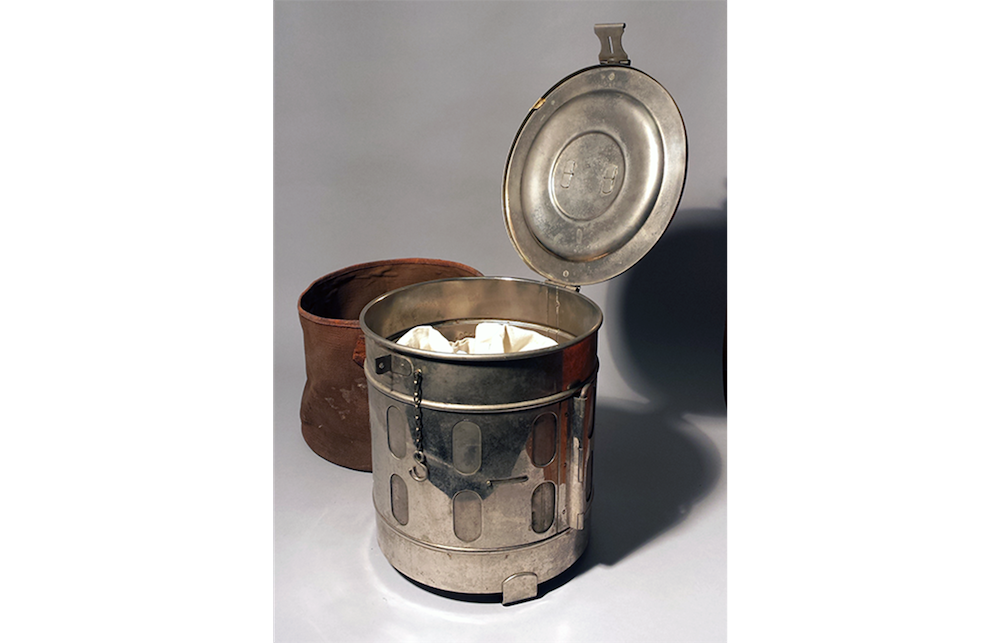
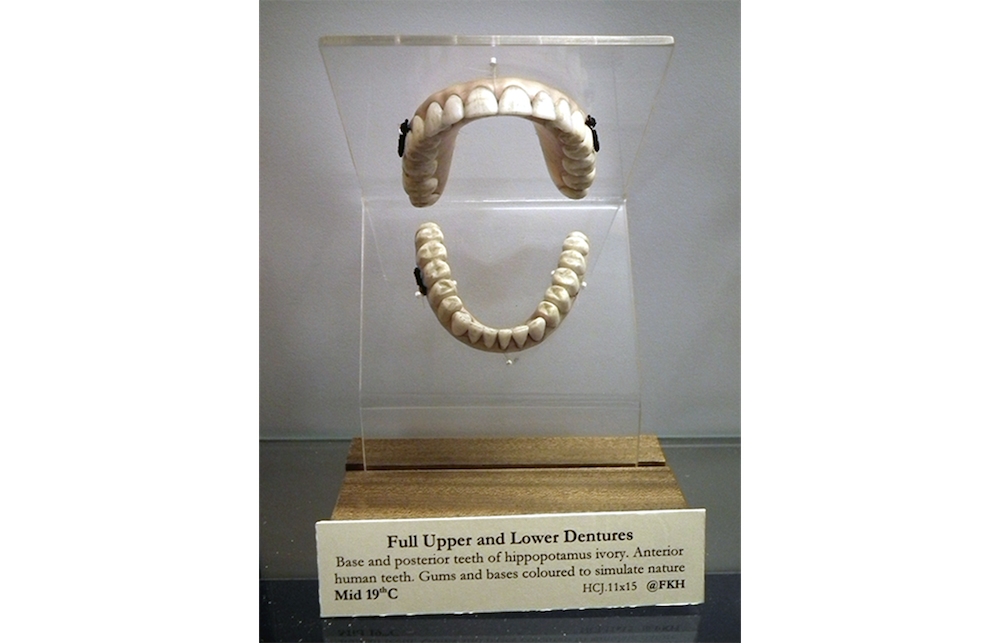
Other items on display drew attention to the diverse range of materials used in surgery and medical care prior to the development of plastics, for example sutures made from catgut (which, contrary to what the name suggests, was typically made from sheep’s intestine), and dentures made from combinations of hippopotamus ivory, rubber, mineral paste, and gold. These materials are far from unproblematic, and at the time of their use in the 19th century, they would have likely been the product of oppressive colonial extraction under the British Empire. This is not to say that the plastics which replaced these materials have provided an ethical solution for making medical devices, or that a return to the materials of the past would be the solution to the new harms caused by medical plastics. However, the museum shows that it was not inevitable that plastic became the de-facto material for use in healthcare, and it is not inevitable that plastic will remain the primary medical material in the future.
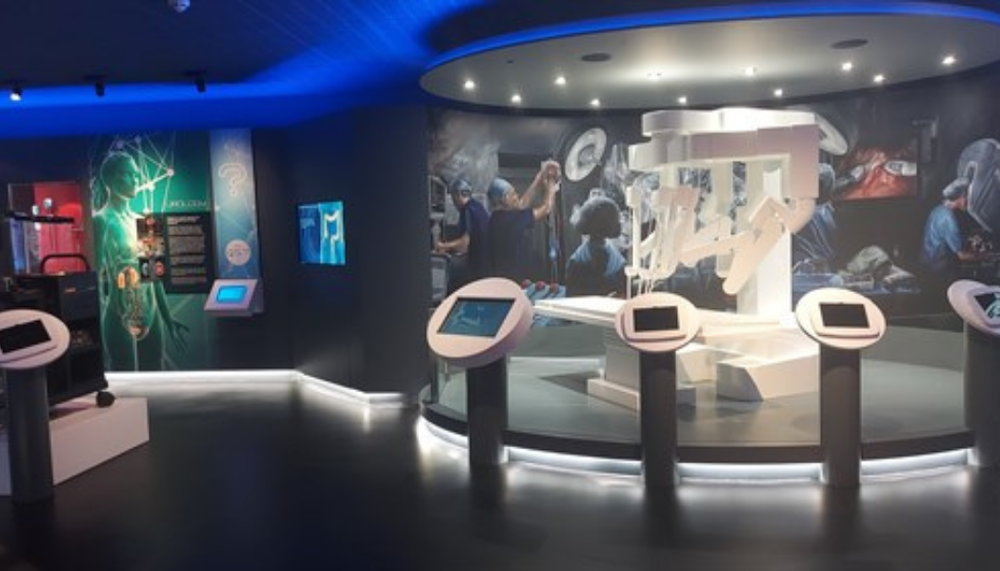
Moving from the past to the present day, the Body Voyager Gallery shows visitors how technological innovations have changed what surgery looks like today, and what it could look like in the future with the advancement of computer assistance and robotics. Whilst new technologies such as the Da Vinci surgical robot have undeniable benefits, innovation does not mean unequivocal progress. Louise admitted that there is one category of medical “stuff” which is absent from public display in the museums: packaging. Single-use plastic packaging is the shadow side of the pre-sterilised medical instruments which have revolutionised healthcare. This packaging, and the myriad other single-use plastics which are found in the modern-day operating theatre such as surgical drapes, masks, gowns, gloves, and intravenous lines, are deeply embedded in the practice of modern surgery. And yet, single-use plastic and the waste it creates are rarely acknowledged, let alone questioned.
Just as we observed when we previously visited the exhibition Injecting Hope: The race for a COVID-19 Vaccine at the National Museum of Scotland, the Surgeons’ Hall Museums presents inspiring stories of innovation and ingenuity, but gives little attention to material footprints, or the hidden costs of a medical innovation paradigm which relies on the extensive use of single-use plastic. As a result, there is less scope for the visitor to imagine possibilities for a medical system which is low-waste, circular, and more holistic in its approach to preventing environmental and social injustices.
The Surgeon’s Hall Museums is a fascinating place which shows us where today’s surgical practices came from, and where they could be heading in the future. Exploring the museum is a more dynamic and engaging way to learn about these topics, compared with simply reading about them or listening to academic presentations.
However, the lack of attention given to plastic and its associated wastes in the museum is conspicuous. Furthermore, the museum could do more to interrogate the complex social, environmental, political, and economic relationships which all medical materials are entangled within. This is something that the project team would be keen to engage on further with the museum. A core question for our project then becomes: how might we use creative and engaging methods to shed light on the materials, technologies and relationships that are normally hidden from view?
Images courtesy of © Surgeons' Hall Museums
